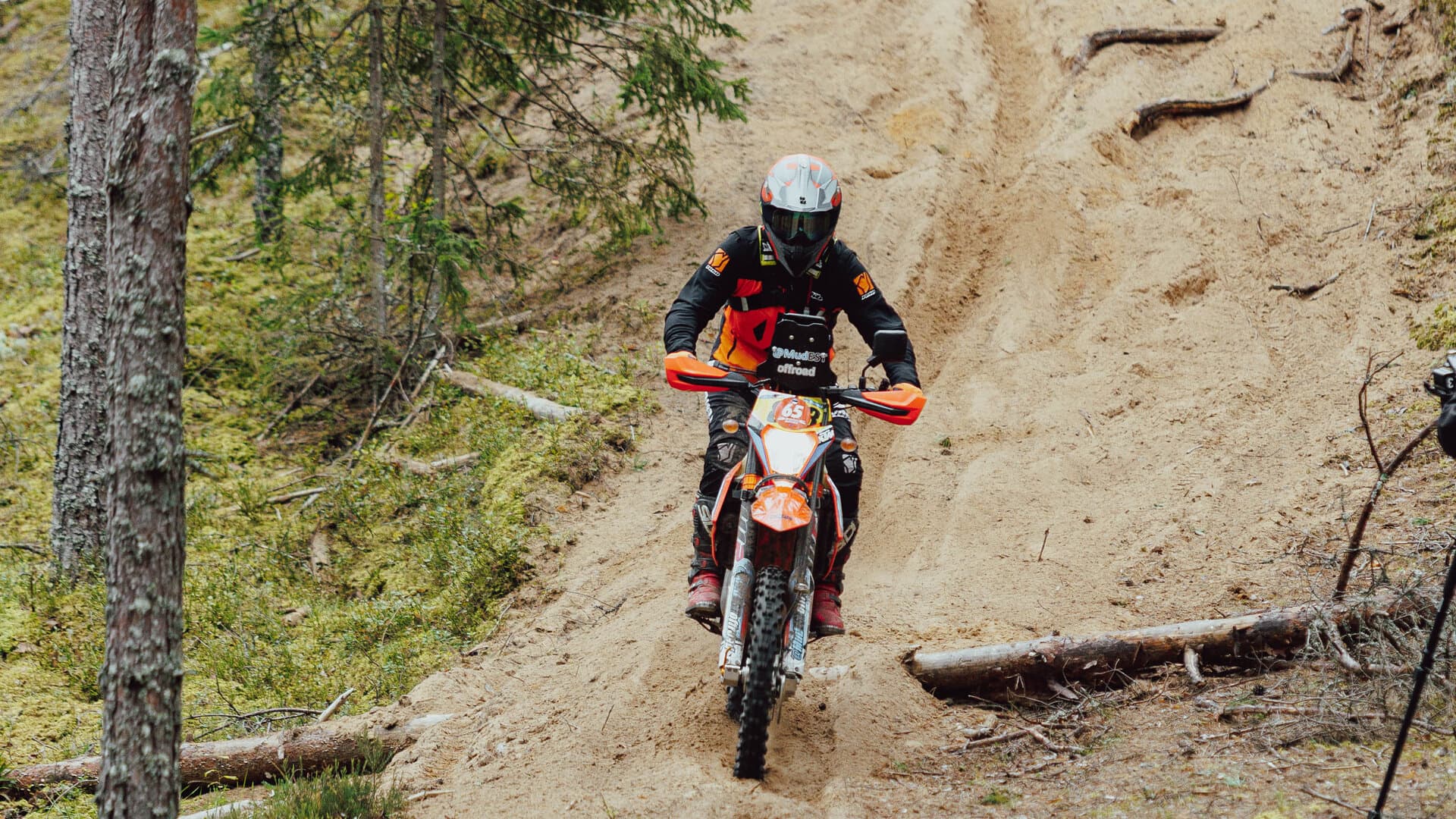
Learn our safety protocols and how to handle unexpected situations on enduro tours. Your safety is our top priority - here's how we keep you protected.
Safety isn't just a priority at Enduro Latvia—it's the foundation of everything we do. While enduro riding is an adventurous sport, it doesn't have to be dangerous when you're properly prepared and know how to respond to unexpected situations.
In our 10+ years of guiding tours, we've developed comprehensive safety protocols that have kept hundreds of riders safe. More importantly, we've learned that informed riders are safer riders.
This guide covers everything: our safety systems, how to prevent common issues, what to do if things go wrong, and how we're there to support you every step of the way.
Our Safety-First Philosophy
Before we dive into emergency protocols, understand this: Most "emergencies" are prevented before they happen.
Three Layers of Safety
1. Prevention (The Best Safety)
- Thorough pre-ride briefings
- Route selection matching group skill level
- Regular bike maintenance
- Weather monitoring and route adjustments
2. Preparedness (When Things Happen)
- All guides are first-aid certified
- Emergency communication equipment
- Clear protocols everyone knows
- Support vehicles on longer tours
3. Response (Professional Handling)
- Calm, trained guides
- Medical contacts in all regions
- Evacuation plans for every location
- Insurance coverage
The result: In our entire history, we've never had a serious injury requiring hospitalization. Minor scrapes and bruises? Sure—they're part of off-road riding. But major incidents are prevented through careful planning and professional guidance.
Pre-Ride Safety Briefing: What You'll Learn
Every tour begins with a comprehensive safety briefing. This isn't a boring lecture—it's an interactive session where we prepare you for the specific conditions you'll encounter.
Hand Signals & Communication
Since we can't hear each other over engine noise, we use standard off-road hand signals:
Essential Signals:
- Closed fist held up: STOP immediately
- Waving motion: Slow down
- Pointing down: Hazard on that side of trail (rock, hole, etc.)
- Patting head: I'm okay (after a fall)
- Thumbs up: All good, continue
- Thumbs down: Problem, need help
Group Communication:
- Guide leads, sweep rider follows at back
- If you stop, everyone stops (we never leave anyone behind)
- If you fall, stay down until guide arrives (we need to see you're okay)
- Two-way radio system between guides
Group Riding Etiquette
Formation Rules:
- Maintain safe following distance (30-50 meters)
- Don't pass the lead guide (they know the route and safe speed)
- Stay in order (helps us track everyone)
- If someone falls, person behind them stops and signals
- Never ride alone ahead of the group
Why this matters: We can only protect you if we know where everyone is.
Trail Hazards You'll Encounter
We'll point out specific hazards for your tour route:
Natural Hazards:
- Loose sand sections (requires momentum)
- Root crossings (hit straight-on, not at angles)
- Water crossings (depth, current, bottom conditions)
- Muddy sections (pick your line carefully)
- Steep descents (rear brake control)
Environmental Hazards:
- Low-hanging branches (duck or block with arm)
- Wildlife (deer, boar—give them space)
- Other trail users (hikers, horses—slow down and be courteous)
What to Do If You Get Separated
This rarely happens, but if it does:
- STOP immediately where you are
- Turn off your engine and listen for the group
- DO NOT try to find your way back
- Wait—your guide will backtrack to find you
- If 10+ minutes pass, call the emergency number we provide
We WILL come for you. Don't panic, don't try to find your way. Stay put.
Common Non-Emergency Situations (And How We Handle Them)
Let's cover situations that feel scary but aren't actually emergencies:
1. You Fall Off the Bike
What usually happens:
- Low-speed fall in soft terrain (sand, grass, mud)
- You slide off, bike falls over
- Ego bruised more than body
What to do:
- Stay down for a moment and assess: any pain?
- Pat your head to signal you're okay
- Guide will approach and check on you
- We'll help pick up the bike together
- Take a breath, drink water, continue when ready
Why it's okay: We ride in soft terrain. Full body armor means minor falls rarely cause injury. Everyone falls. It's part of learning.
When to speak up: If anything actually hurts (not just scared, but pain), tell the guide immediately.
2. You Get Stuck (Bike Won't Move)
Common stuck situations:
- Deep sand (bike bogs down)
- Mud (rear wheel spins)
- Steep hill (can't make it up)
What to do:
- Don't keep spinning the wheel (makes it worse)
- Put bike in neutral and signal for help
- Guide will assist—either coaching you through or helping push/tow
- No shame in this—terrain challenges everyone
Pro tip: Sometimes the guide will walk you through technique to escape yourself. This builds skills. Other times, they'll just extract you quickly to keep the group moving. Trust their judgment.
3. You're Too Tired to Continue
Physical fatigue signs:
- Arms feel like jelly
- Hands cramping despite breaks
- Legs shaking
- Concentration wavering
What to do:
- Signal to stop at the next break point
🏍️ Ready to experience this yourself?
- Tell the guide: "I need a longer break"
- We'll extend the rest, you'll eat and hydrate
- If you're still too tired, we have solutions (see below)
Solutions we've used:
- Take a longer rest stop (20-30 minutes)
- Adjust route to easier terrain
- In extreme cases, support vehicle can pick you up (multi-day tours)
Important: This isn't "failing." Off-road riding is physically demanding. Experienced riders get tired too. Speaking up prevents exhaustion-related mistakes.
4. Bike Won't Start or Has Mechanical Issue
What to do:
- Don't try to fix it yourself (unless you're a mechanic)
- Signal your guide
- We'll diagnose and fix if it's simple (loose connection, flooded engine, etc.)
- If it requires parts, we have backup plans:
- Spare parts for common issues
- Support vehicle can pick up disabled bike
- Rental pool has backup bikes for serious issues
You're never stranded. We've handled everything from flat tires to electrical issues in the field.
Real Emergency Situations: Our Protocols
Now let's cover actual emergencies and exactly what happens:
Medical Emergencies
Level 1: Minor Injury (Cuts, Scrapes, Minor Sprains)
Our response:
- Guide administers first aid immediately
- Clean and dress wounds
- Assess if you can continue safely
- Adjust pace/route if needed
- Monitor you for rest of tour
First aid kit includes:
- Bandages and sterile dressings
- Antiseptic wipes
- Elastic bandages for sprains
- Pain relievers
- Blister treatment
- Tick removal tools
- Emergency blanket
Level 2: Moderate Injury (Suspected Fracture, Significant Pain)
Our response:
- Stabilize the injury
- Call emergency services if needed (guide's decision)
- Group stays together—one guide with injured rider, one with group
- If on remote trail, support vehicle comes to nearest access point
- Evacuation to road/meeting point if needed
- We accompany you to medical facility
Your job: Provide accurate information (what hurts, how it happened, pain level 1-10).
Level 3: Serious Emergency (Unconscious, Severe Bleeding, Suspected Spinal Injury)
Our response:
- Immediate emergency call (112 in Latvia)
- First aid to stabilize
- Clear location transmitted (GPS coordinates)
- One guide stays with patient, other manages group
- Helicopter evacuation if ground ambulance can't access
- We stay with you until medical professionals take over
Important: These situations are EXTREMELY rare in our experience, but we train for them regularly.
Lost or Separated Rider (Despite Protocols)
If YOU realize you're separated:
- STOP immediately
- Turn off engine, listen
- Call emergency number (provided at briefing)
- Stay where you are
- We will find you
What we do:
- Immediate headcount when we notice
- Backtrack to last confirmed sighting
- Radio communication between guides
- Establish last known position
- One guide searches, one stays with group
- If not found in 20 minutes, we call local search and rescue (we have direct contacts)
Prevention: This is why we stress staying in formation and speaking up if you need to stop.
Weather Emergencies (Severe Storms, Lightning)
Our monitoring:
- Weather forecast checked daily
- Real-time radar apps on guide phones
- Local weather knowledge (patterns we recognize)
If caught in severe weather:
Lightning:
- Immediate stop
- Move away from bikes and trees
- Crouch low in open area
- Wait for storm to pass (typically 15-30 minutes)
- Resume when safe
Heavy rain/hail:
- Take shelter under dense tree cover (if no lightning)
- Put on extra waterproof layers
- Wait out worst of it
- If prolonged, we adjust route to easier terrain (mud is slippery)
Extreme heat:
- More frequent breaks in shade
- Mandatory hydration checks
- Slower pace
- Watch for heat exhaustion signs (guide-monitored)
Bike Fire (Rare but Possible)
What causes it: Fuel leak hitting hot engine, electrical short
What to do:
- Stop and get away from bike
- If fire is small and you have extinguisher, use it
- If fire is large, let it burn—safety first
- We have insurance for this
Prevention: Our bikes are maintained to prevent these issues, but off-road riding can break things in unexpected ways.
Medical Conditions: What You MUST Disclose
Please inform us during booking if you have:
Critical to know:
- Heart conditions
- Epilepsy/seizure disorders
- Severe allergies (bee stings, medications)
- Diabetes (we'll help monitor blood sugar)
- Asthma (bring inhaler)
- Recent surgery or injuries
Good to know:
- Knee/back problems (affects bike choice)
- Previous concussions
- Medications that cause drowsiness
- Claustrophobia (tight forest trails)
Why it matters: Not to exclude you, but to prepare appropriately. We've successfully guided riders with various conditions—we just need to know in advance.
Emergency Contact Information
At every briefing, you receive:
Emergency Numbers (Saved in Your Phone)
- Guide's direct phone: For immediate contact
- Secondary guide phone: Backup
- Base office: For non-urgent issues
- Latvia emergency services: 112 (works even without SIM card)
Location Sharing
For longer tours, we provide:
- GPS coordinates of start/end points
- Meeting point locations
- Evacuation access points
Your family can track general tour routes if desired.
What You Can Do to Stay Safe
Before the Tour
Physical Preparation:
- Don't show up exhausted (get good sleep)
- Eat a proper breakfast
- Hydrate the day before
- Avoid alcohol the night before
Mental Preparation:
- Read the briefing materials we send
- Watch videos of similar trails (if you're nervous)
- Ask questions during booking—no question is stupid
- Be honest about your skill level
During the Tour
Listen to Your Body:
- Speak up when tired (before you're exhausted)
- Take offered breaks (even if you feel okay)
- Hydrate regularly (thirst means you're already dehydrated)
- Eat snacks to maintain energy
Stay Focused:
- Don't ride beyond your comfort level
- If a section scares you, tell the guide—we'll coach you or find an alternate route
- Look where you want to go (your bike follows your eyes)
- Don't get competitive or show off
Communication:
- Ask questions if you don't understand something
- Report issues immediately (weird noise, feeling unwell, etc.)
- Use hand signals consistently
- Keep your phone accessible
After the Tour
Monitor Yourself:
- Delayed soreness is normal
- Sharp pain is not—see a doctor
- Tick check (Latvia has ticks in forests)
- Treat any cuts/scrapes properly
Insurance & Liability
What's Covered
Our insurance includes:
- Third-party liability
- Equipment damage (with excess)
- Rider accident coverage
Your travel insurance should cover:
- Medical treatment
- Emergency evacuation
- Trip cancellation
- Personal belongings
We strongly recommend comprehensive travel insurance for any international trip.
Waiver & Acknowledgment
You'll sign a waiver acknowledging:
- Inherent risks of off-road motorcycling
- Your responsibility to follow safety instructions
- Physical fitness to participate
- Medical disclosure accuracy
This doesn't mean we're not responsible—it means you understand and accept the nature of the activity.
Real Stories: How We've Handled Situations
Case Study 1: The Twisted Ankle
What happened: Rider stepped awkwardly when dismounting for a water break. Ankle swelled immediately.
Our response:
- First aid—ice pack, elevation, elastic bandage
- Assessed: could wiggle toes, no severe pain with light pressure
- Decision: likely sprain, not fracture
- Called support vehicle to meet us at next road crossing (20 min away)
- Rider driven to local clinic for X-ray (sprain confirmed)
- Rider chose to spectate next day instead of riding
Outcome: Minor injury, properly treated, rider appreciated how quickly we responded.
Case Study 2: The Separated Rider
What happened: Rider stopped to adjust boot without signaling. Group continued, not noticing immediately.
Our response:
- Headcount at next break revealed missing rider
- Both guides communicated via radio
- One backtracked while other stayed with group
- Found rider within 5 minutes (still at stop point)
- Reviewed hand signals with entire group
Outcome: No harm done, valuable learning moment for everyone.
Case Study 3: The Sudden Storm
What happened: Lightning storm appeared faster than forecast predicted.
Our response:
- Stopped immediately when we saw lightning
- Moved group to low-lying open area
- Waited 25 minutes for storm to pass
- Checked forecast and continued
- Slightly adjusted route to avoid worst muddy sections
Outcome: Everyone stayed dry (rain never got heavy), learned proper lightning protocol, continued tour safely.
Your Safety Is Our Reputation
We've built Enduro Latvia's reputation on one principle: Bring every rider home safely.
This means:
- We'll slow down if needed
- We'll adjust routes based on conditions
- We'll extend breaks or even end early if that's the safe choice
- We'll say "no" to risky decisions even if riders want to try
Your safety trumps everything—even if it means you don't complete the planned route.
Questions About Safety?
Q: What if I panic on a difficult section?
A: Stop, signal, breathe. Your guide will come to you, talk you through it or find an easier route. No pressure to do anything that terrifies you.
Q: Can I opt out of challenging sections?
A: Absolutely. We often have alternate routes. Worst case, you wait at a meeting point while others do the hard bit.
Q: What if someone in my group is riding unsafely?
A: Tell the guide immediately. We'll address it privately. Reckless riding endangers everyone and won't be tolerated.
Q: Do I need special insurance?
A: Regular travel insurance covers most situations. Check your policy includes "adventure sports" or "motorcycling activities."
Q: What's the most common injury you see?
A: Minor bruising and muscle soreness. Actual injuries requiring medical attention are very rare.
Q: Can I bring my own first aid items?
A: Yes, especially if you have specific medications or preferences.
Final Thoughts: Prepared Not Scared
This guide might seem intense, but here's the reality: Most tours have zero incidents beyond minor falls and tired muscles.
We share all this information not to scare you, but to empower you:
- Know what might happen
- Know how to respond
- Know we're prepared
When you're informed and prepared, you can relax and enjoy the experience. Safety isn't about fear—it's about freedom to have an adventure without worry.
Ready to ride safely? Check our available dates or message us with any safety questions. We're here to ensure you have an amazing adventure with peace of mind.
Related Articles
The Right Equipment for an Enduro Adventure: Your Complete Gear Guide
Learn what equipment you need for a safe and comfortable enduro tour. From helmets to boots - we show you what's really important and what you need to bring.
Beginner's Weekend Enduro Checklist: Everything You Need for Your First Tour
Planning your first enduro weekend in Latvia? This comprehensive checklist covers gear, fitness, mental preparation, and what to expect on tour day.
Enduro in Latvia by Season: When to Ride & What to Expect
Discover the best times to experience enduro riding in Latvia, from muddy spring trails to golden autumn adventures. Learn what each season offers and how to prepare.